A good brief saves more time than a good render engine
Almost every delay and every round of "this isn’t quite what we meant" on a visualization project traces back to the same place: the brief. Not the modeling, not the lighting, not the software — the initial handover of information from client to studio. A studio can only be as precise as the brief it’s working from, and the gap between a vague brief and a clear one shows up directly in how many revision rounds a project actually needs.
None of what follows is complicated, and none of it requires design expertise on the client’s side — it’s mostly a matter of sending what you already have, in the right form, before the first frame gets lit.
Start with what actually exists
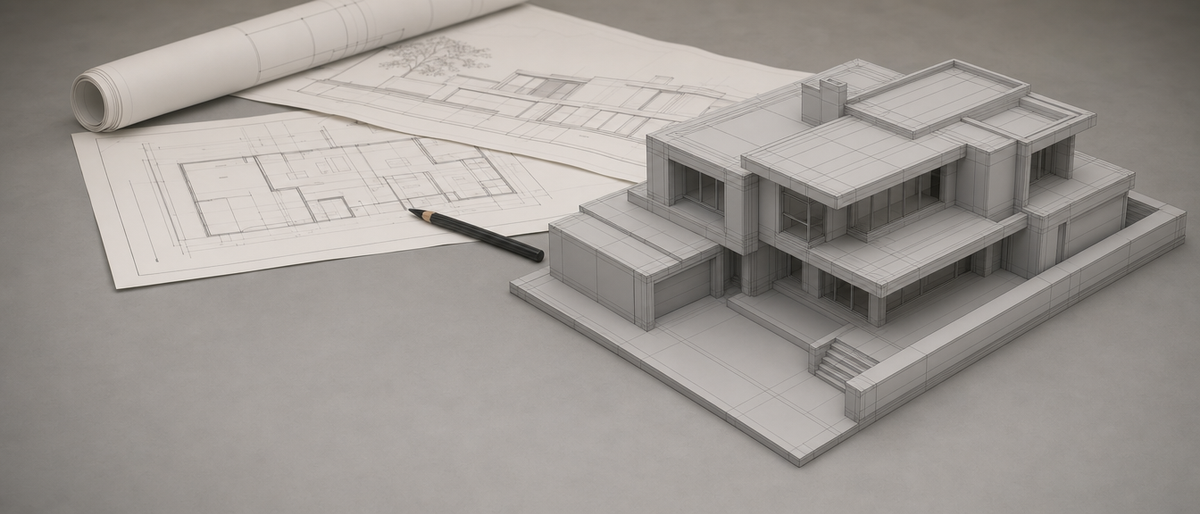
Whatever stage the design is at, send the real source files rather than a summary of them — CAD drawings, BIM models, or SketchUp/Revit files if that’s what the design was built in. A studio built on a different pipeline internally can still work from those formats; converting a client’s existing drawings into the render engine is a normal, expected part of the process, not something the client needs to solve first. Alongside the drawings, site photos or a location plan help enormously wherever the building sits in a real, specific context rather than an empty field.
Say who the images are actually for
The same building looks different depending on who’s meant to be convinced by it. A render built for a municipal planning submission needs to read as accurate and slightly restrained; one built for a luxury buyer walking through a sales gallery needs to read as aspirational; one built for an institutional investor deck needs to communicate scale and financial confidence over atmosphere. Naming the audience up front — before any lighting decisions get made — is one of the highest-leverage things a brief can do, because it quietly answers a dozen smaller creative questions before they get asked.
Bring references, not just adjectives
"Modern and warm" means something different to every person who reads it. A handful of reference images — other renders, real interiors, film stills, anything that captures the mood being aimed for — removes almost all of that ambiguity in a way words can’t. References don’t need to be architectural; a lighting mood borrowed from a hotel lobby or a material palette from an unrelated interior communicates faster than a paragraph of description ever will.
Define scope before asking for a quote
"A few renders" isn’t a scope — it’s a starting point for a longer conversation. A studio can quote properly once it knows roughly what’s needed: how many exterior stills versus interior views, whether an aerial matters, whether the project needs a flythrough film or an interactive walkthrough alongside stills, and which spaces are the priority if the budget doesn’t stretch to everything. Deciding early whether the deliverable is stills, film, an interactive experience, or a full multi-format campaign shapes the production plan from day one rather than getting bolted on halfway through.
Set the mood, the season and the time of day
Whether a scene reads as golden-hour evening warmth or crisp midday clarity is a decision, not a default — and it’s far cheaper to make that decision in the brief than to ask for it after a full daylight scene has already been lit and approved. The same applies to season: a landscape rendered in full summer green tells a different story than the same building rendered against bare winter trees, and both are valid choices depending on when the marketing campaign actually runs.
Agree on revisions and deadlines up front
Most visualization packages are built around a fixed number of revision rounds — commonly one or two, scaling up for larger or more complex projects — precisely because unlimited revisions make budgets and timelines impossible to plan against. Agreeing on that number before work starts, along with a real delivery date, turns revisions into a structured part of the process instead of an open-ended negotiation partway through.
Specify where the images will actually live
A render heading for a billboard or a printed presentation board needs a different resolution and colour profile than one going straight to a website or social feed — 4K is a reasonable default for most digital use, with higher resolution and print-ready colour profiles reserved for large-format or flagship material. Saying where an image will be used, and at what size, prevents a studio from either over-delivering resolution nobody needs or under-delivering something that turns out fuzzy on a trade-show banner.
What an incomplete brief actually costs
None of this is paperwork for its own sake. A missing detail in the brief doesn’t disappear — it just resurfaces later, usually after a full scene has already been built, lit and rendered, at which point fixing it costs a full revision round instead of a five-minute conversation. The studios that consistently deliver on the first pass aren’t working faster; they’re working from a brief that already answered the questions that would otherwise come up midway through production.
We go through what happens on our side of that handover — from brief to finished frame — in our breakdown of the visualization production pipeline. If you’re putting a brief together for an upcoming project, get in touch — we’re happy to help shape it before it turns into a quote.