One type, four addresses
Four separate commissions, two or three frames each, spread across seven months. Shown one at a time they would read as fragments. Together they are the more useful thing: evidence of a type being built out across a city, and of a working relationship that survived the first project.
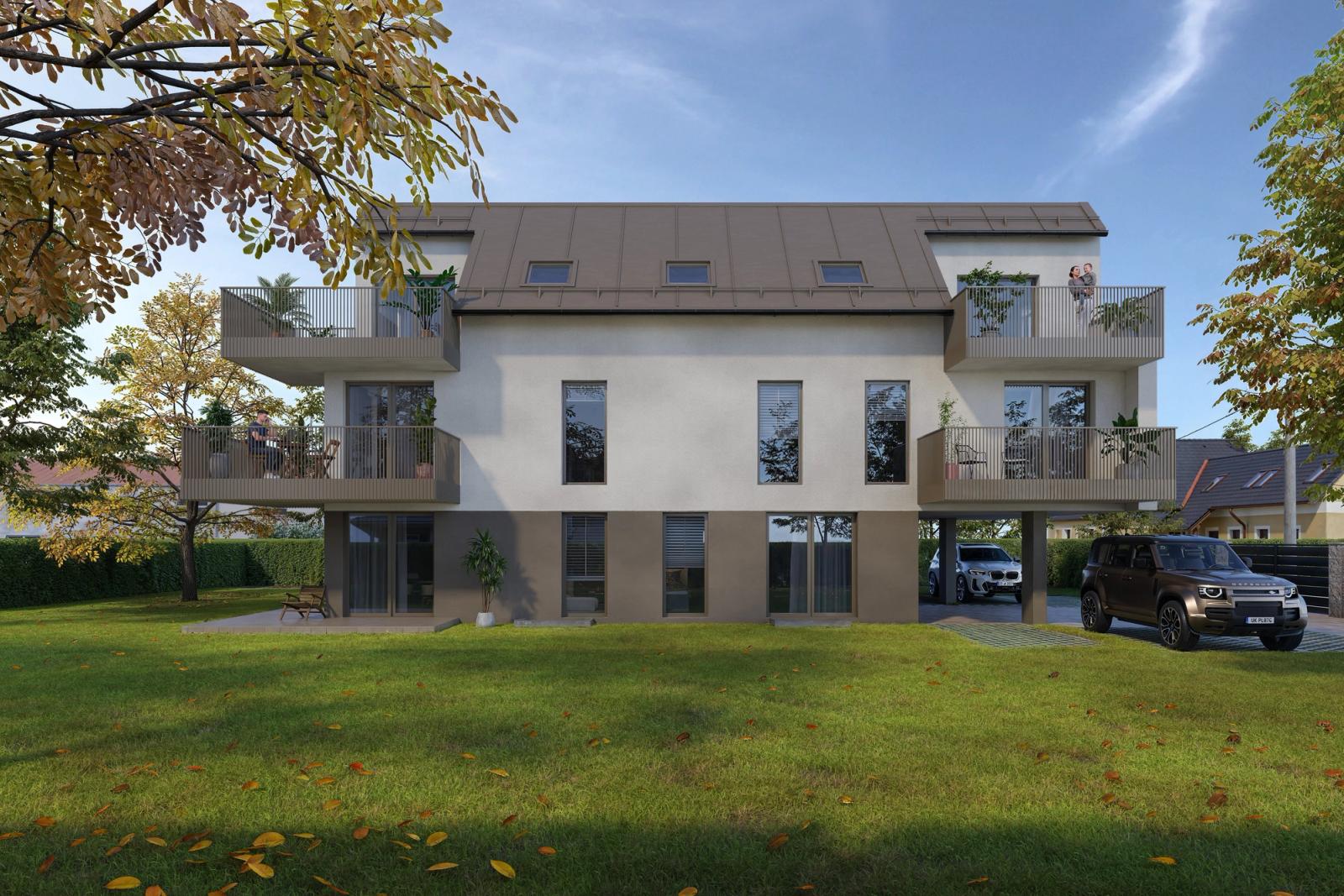
The buildings share a grammar. Three or four storeys, standing-seam roof with dormers, slatted balcony screens, parking tucked under the overhang. The job each time was to make one address distinguishable from the last without inventing differences the architecture does not have.
Same light, different ground
Light stayed consistent on purpose: high cloud or low autumn sun, never midday. A set shot under one sky reads as one practice's work, which matters more to the architect showing it than any single hero frame.
What changes between addresses is the ground. One sits above a sloping lawn, another behind a clipped hedge, a third among neighbours close enough to appear in frame. Those surroundings do the work of telling the four apart, so the buildings did not have to be styled into false variety.